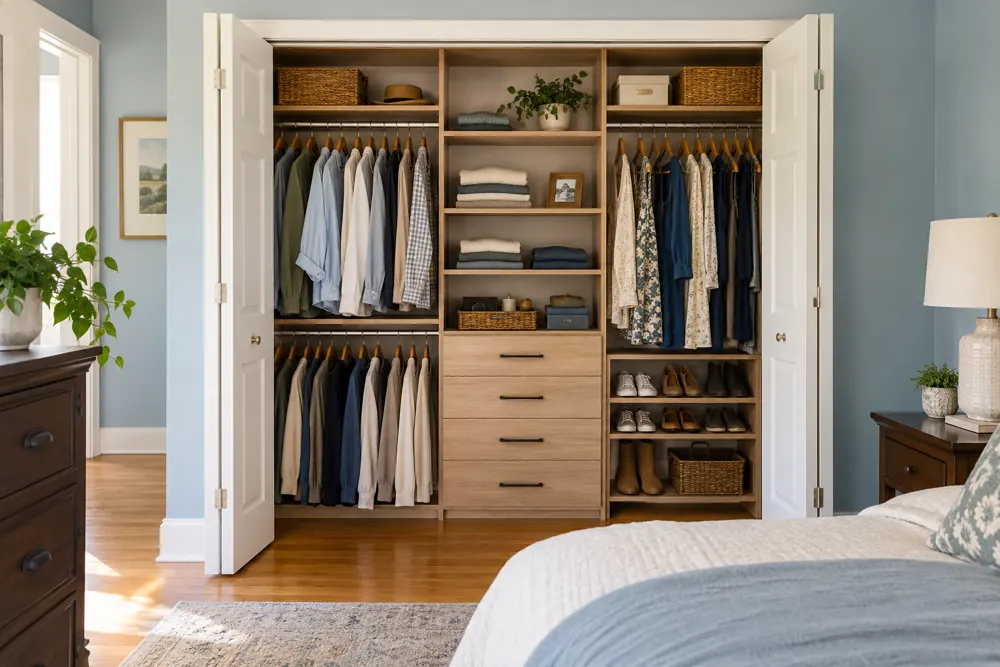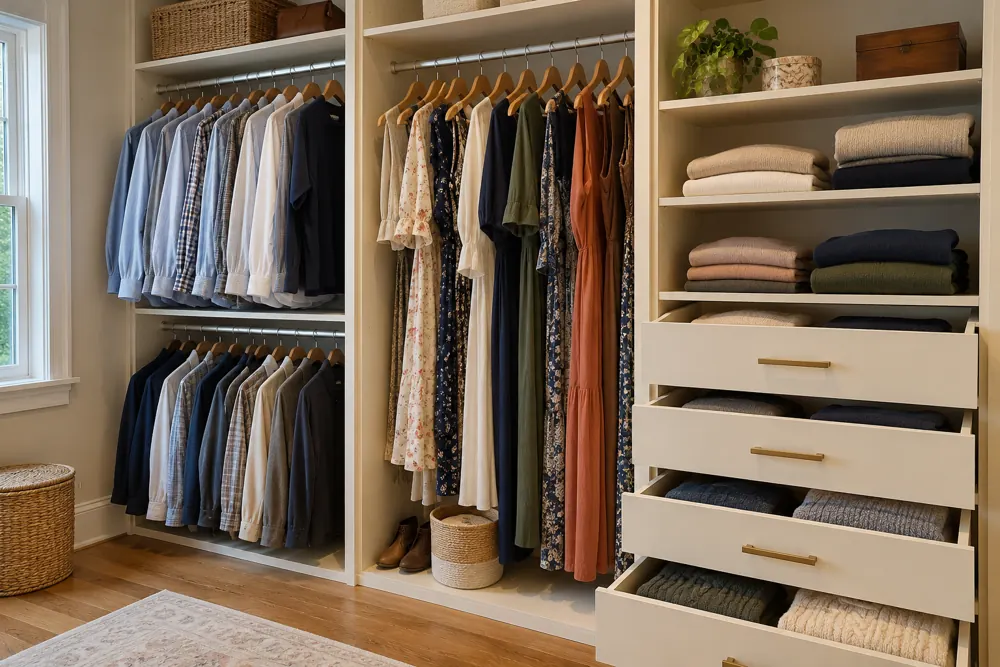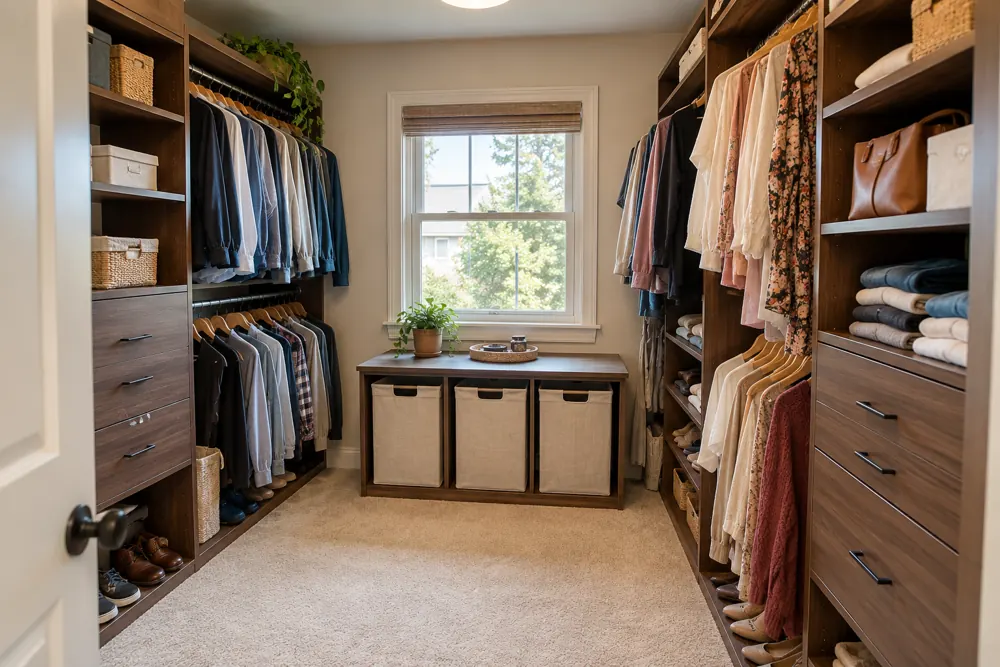
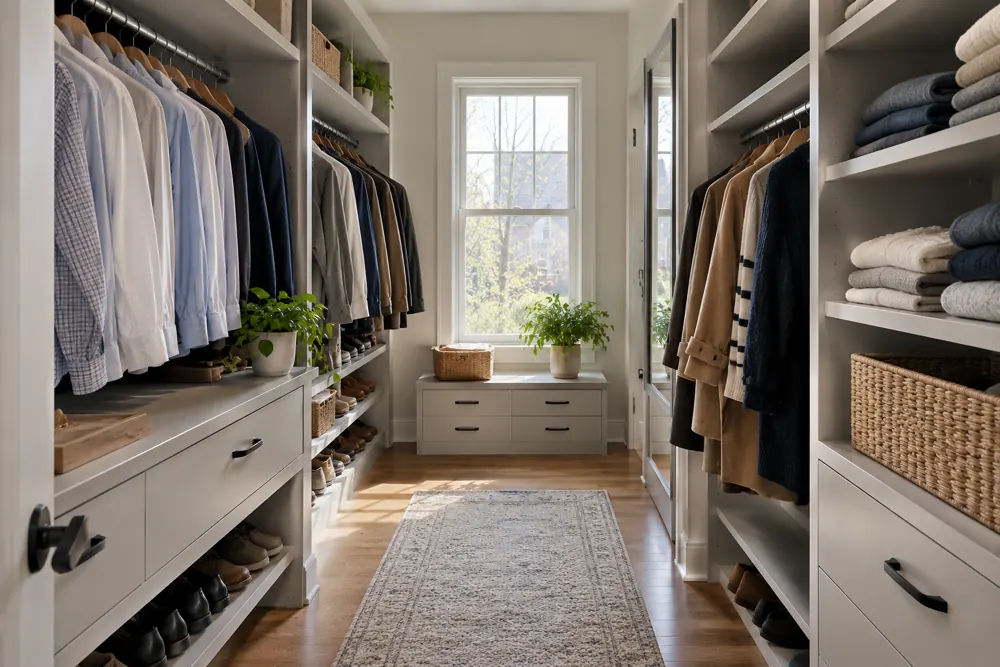
Count categories rather than individual possessions
You do not need a spreadsheet of every shirt to plan a better closet. Start by grouping what you keep: short hanging clothes, long garments, folded clothing, shoes, bags, accessories and items used only occasionally. The aim is to understand the mix of storage, not to produce a perfect count.
Look at what is currently stored outside the closet as well. A dresser, under-bed box or hallway hook may be carrying part of the wardrobe. Decide which of those belongings should move into the new layout and which should remain where they are. Otherwise, the proposed storage may be sized around only part of the problem.
Notice how your clothes behave
Clothes take up space in different ways. Bulky jackets behave differently from shirts, and boots need a different home from low shoes. A stack of sweaters may look tidy on a deep shelf but be difficult to retrieve without disturbing everything above it. Record those frustrations while the clothes are still in their usual places.
Take simple photos of the sections that are overfilled and the ones that are barely used. A half-empty upper shelf can point to an access problem rather than a lack of possessions. The useful question is not only how much space exists, but whether the people using it can use it comfortably.
Separate the daily wardrobe from the archive
Everyday clothing deserves the most convenient storage. Formalwear, travel pieces and out-of-season items can often live in a less prominent part of the layout. This distinction helps avoid filling the easiest shelves with belongings you retrieve only a few times a year.
Be realistic about what you expect to keep. A design consultation is not a requirement to clear out half the wardrobe. However, planning around items you already intend to donate or move elsewhere can create unnecessary cabinetry. A quick edit makes it easier to discuss future capacity without confusing it with current clutter.
Bring a short inventory
A useful inventory can fit on one page. Add a note about the part of getting dressed that feels slowest, because that often reveals the most valuable improvement.
- Estimate the balance of short and long hanging clothing.
- List shoes or bags that need special consideration.
- Identify folded items that would be easier in drawers.
- Note shared belongings, seasonal storage and likely future changes.
Make it work in your home.
FG Home and Closets designs and installs storage from Aurora, Illinois. Share your room, priorities and ZIP code to start a free design consultation.
Explore custom closets Explore reach-in closets