Make daily choices easy to see.
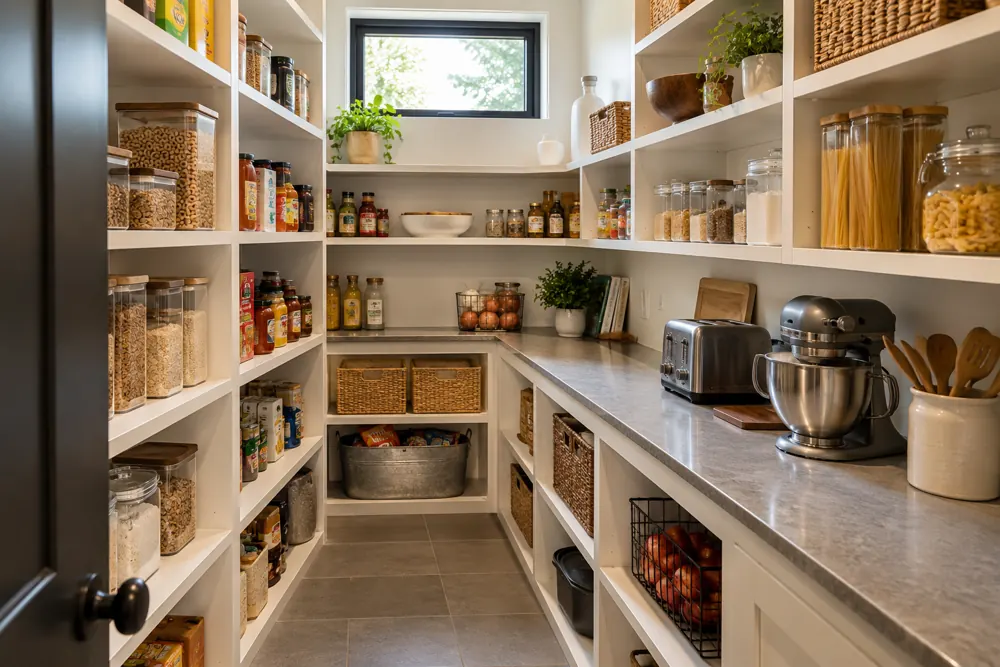
Start with the items your household uses every day. Breakfast supplies, school snacks and dinner ingredients may each deserve a clear section. Keeping them together can reduce searching and help you notice what needs replenishing before another trip to the store.
Shelf depth matters as much as shelf count. A shallow shelf can keep small jars visible, while larger packages need a different footprint. We look at the contents before creating a layout so the smallest things are not lost behind the biggest.
- Reachable bins for the items children use independently.
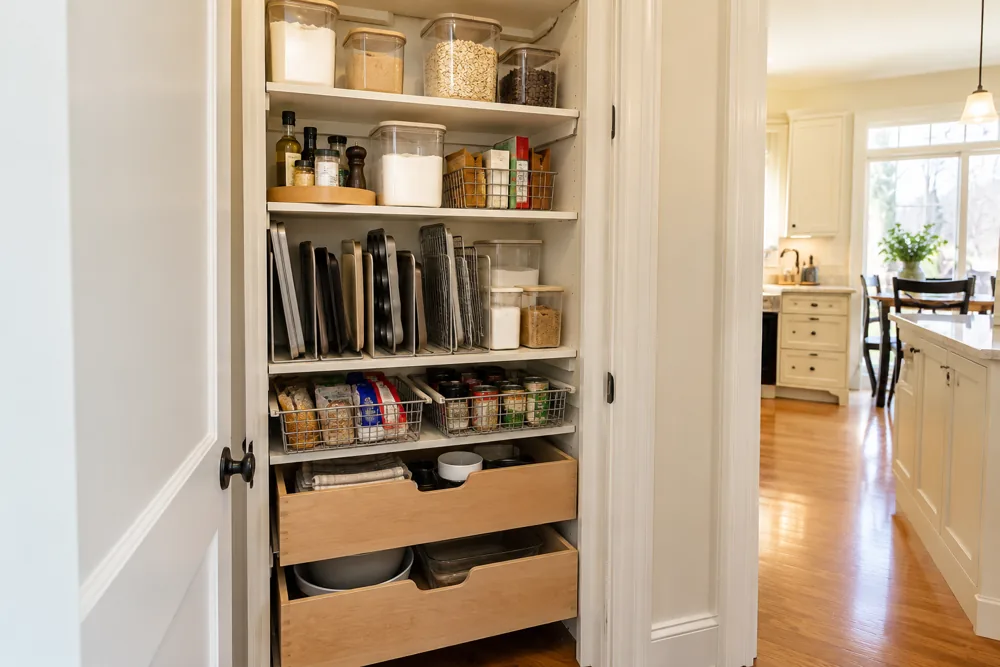
- An upright section for trays and cutting boards.
- A separate home for overflow and less-used serving pieces.
Plan the heavier pieces carefully.
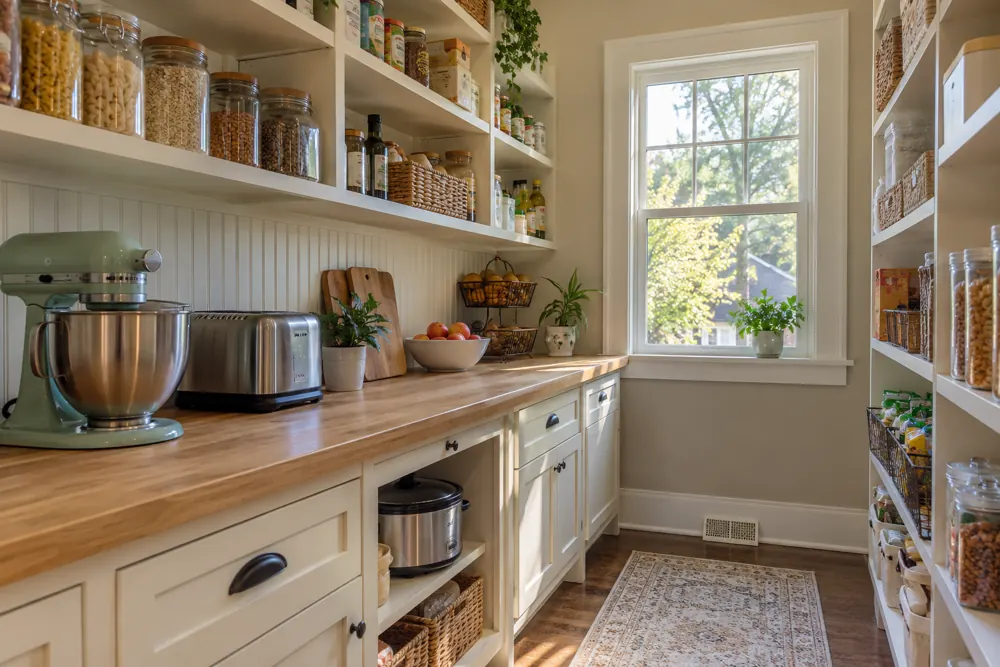
Appliances and bulk containers need storage selected for their dimensions and expected loads. A mixer that lives too high may be difficult to use; a basket that is too deep can make small packages disappear. During the consultation, show us the awkward objects as well as the easy ones.
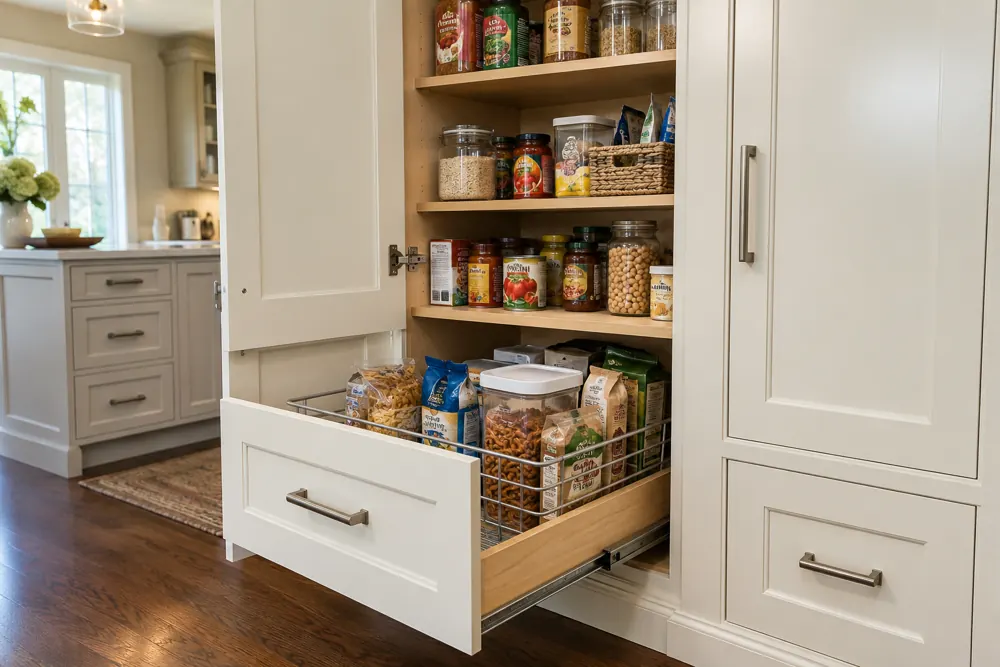
If the pantry is narrow, open shelving may keep access simpler than several opposing pullouts. If it is deep, drawers can bring items forward where clearance permits. We compare those options using the actual door and aisle dimensions.
Create a routine that is easy to maintain.
Leave some flexibility between categories instead of assigning every shelf to one exact package size. Adjustable spacing can help as groceries and habits change. A few useful zones are often easier to keep organized than many tiny compartments.
Photos of a normally stocked pantry tell us more than an empty-room picture. Share the storage problem you want to solve, the current opening and the nearby kitchen finishes. We can then discuss a design and a project-specific proposal.