Solve the layout before the styling
Matching containers can make a pantry look organized, but they cannot fix an awkward shelf or an appliance with nowhere to go. Start with the way groceries enter the house, the foods you reach for most often and the items that disappear at the back of the current storage.
A useful pantry plan gives each category an accessible home. It should work with ordinary packaging and the habits of the people using it. Decanting everything is a separate choice, not a requirement for good storage. The main aim is to make it easier to see, retrieve and replace what you already buy.
Map the contents before choosing shelves
Group pantry contents into broad categories such as breakfast, cooking staples, snacks, baking supplies and occasional entertaining items. Note bulky packages, tall bottles and large appliances. Their shapes can influence shelf spacing and whether a counter, drawer or pull-out would be useful.
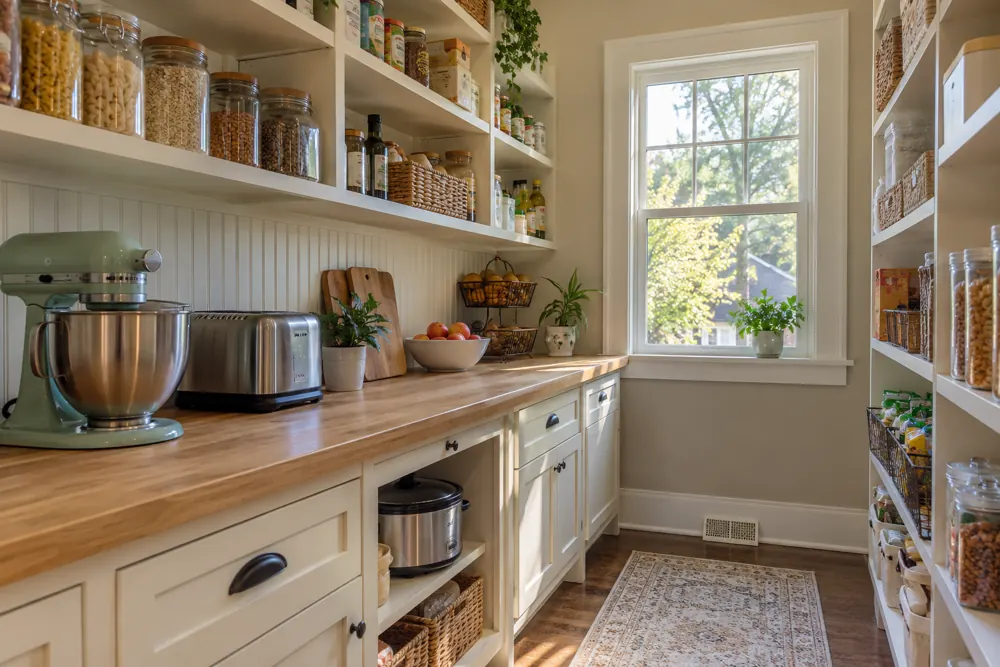
Look beyond groceries. Paper supplies, serving pieces and small kitchen appliances often compete for pantry space. Decide which of them belong there before selecting the layout. If an item is used at a different point in the kitchen, another location may be more convenient than fitting it into the pantry simply because it has a door.
Make the convenient space count
Everyday ingredients should not require moving several other items first. Keep frequently used categories in positions that are easy for their intended users to reach. Higher or less prominent areas can hold occasional supplies, provided access remains practical for the household.
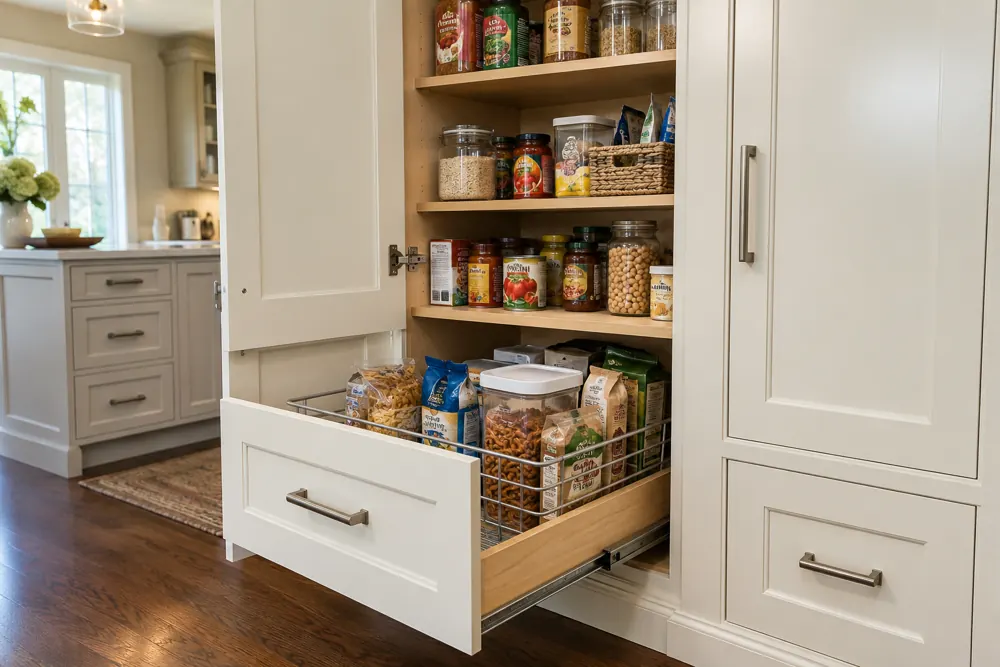
Check the pantry with its doors open and the proposed contents in place. A drawer or basket needs room to travel, and a deep shelf needs a plan for the items at the back. The best arrangement is the one that continues to work after a busy grocery trip, when nobody is carefully staging the shelves.
Choose accessories after the storage plan
Once the layout is clear, containers and baskets can be selected for specific jobs. This reduces the chance of buying a coordinated collection that does not fit the shelves or the food you actually keep.
- List the groceries and appliances that need unusual space.
- Give frequent-use categories the most convenient positions.
- Check door and drawer movement.
- Buy containers only after confirming the shelf sizes and intended contents.
Make it work in your home.
FG Home and Closets designs and installs storage from Aurora, Illinois. Share your room, priorities and ZIP code to start a free design consultation.
Explore pantries