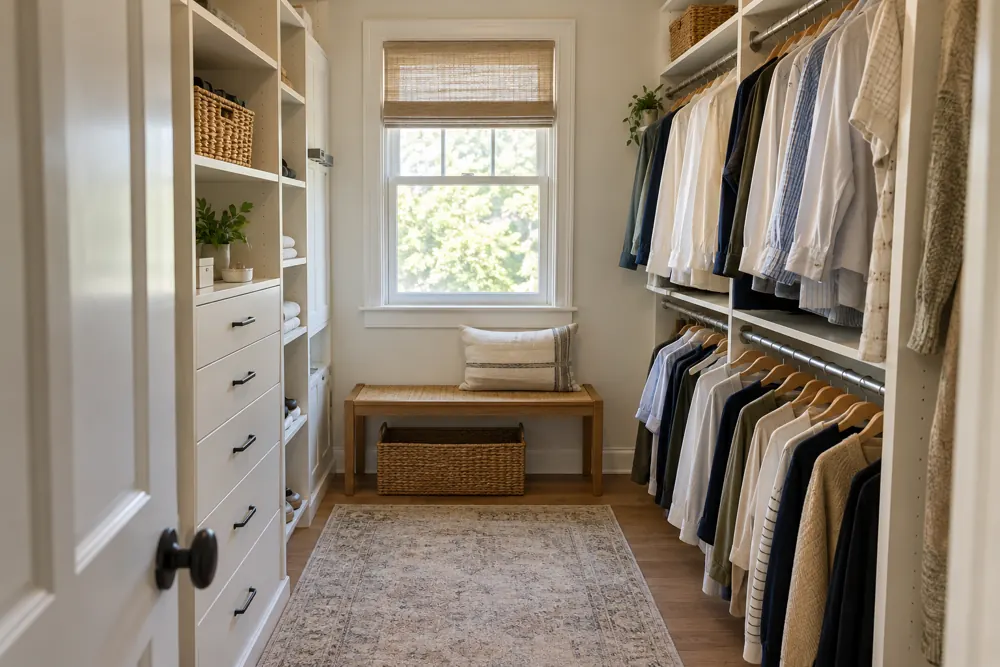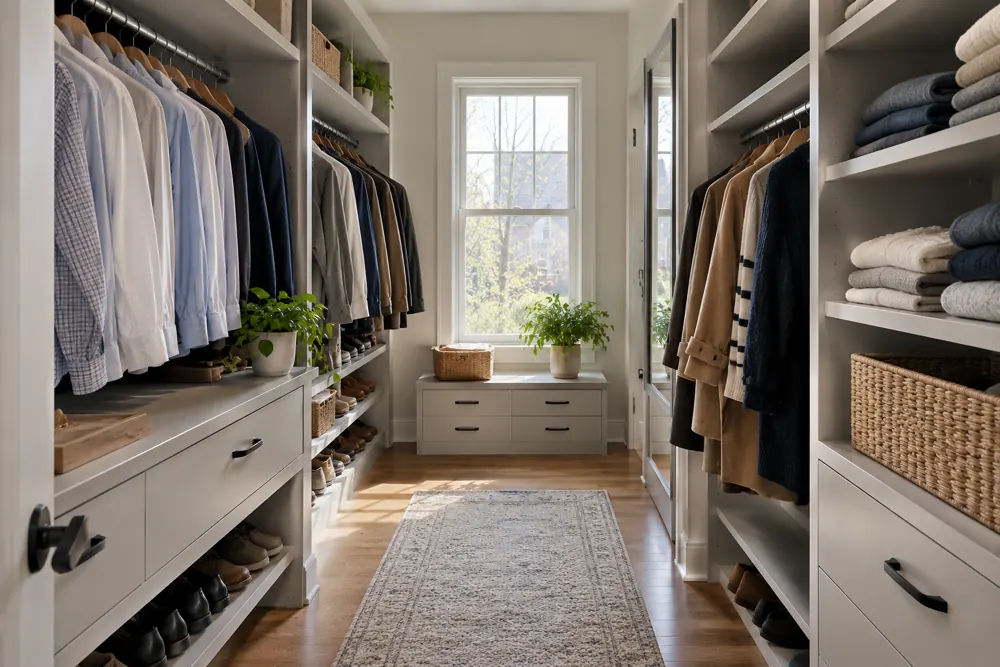
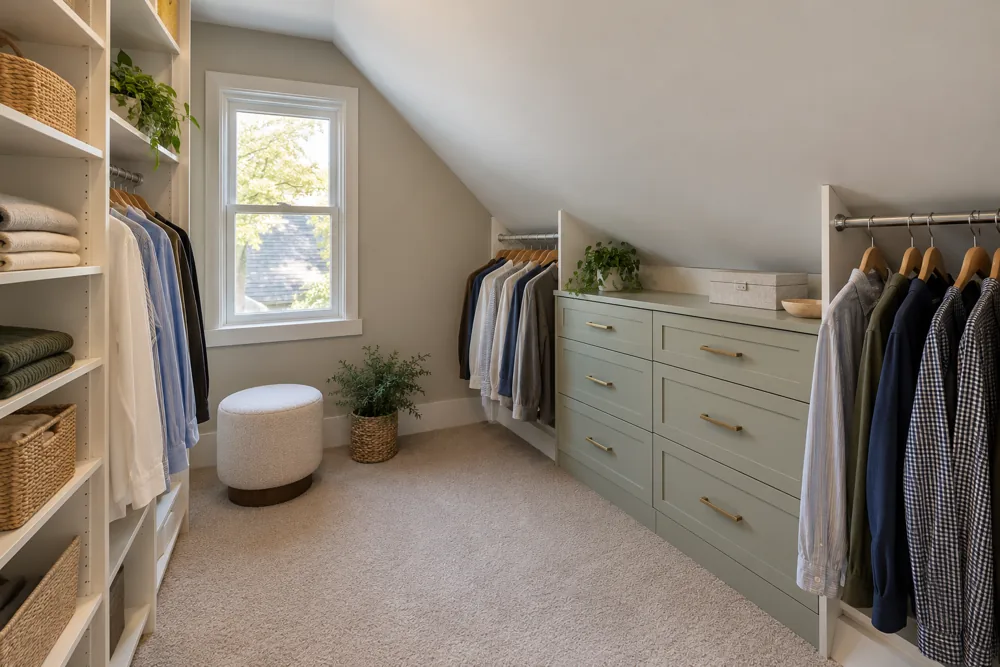
Give each person a useful share.
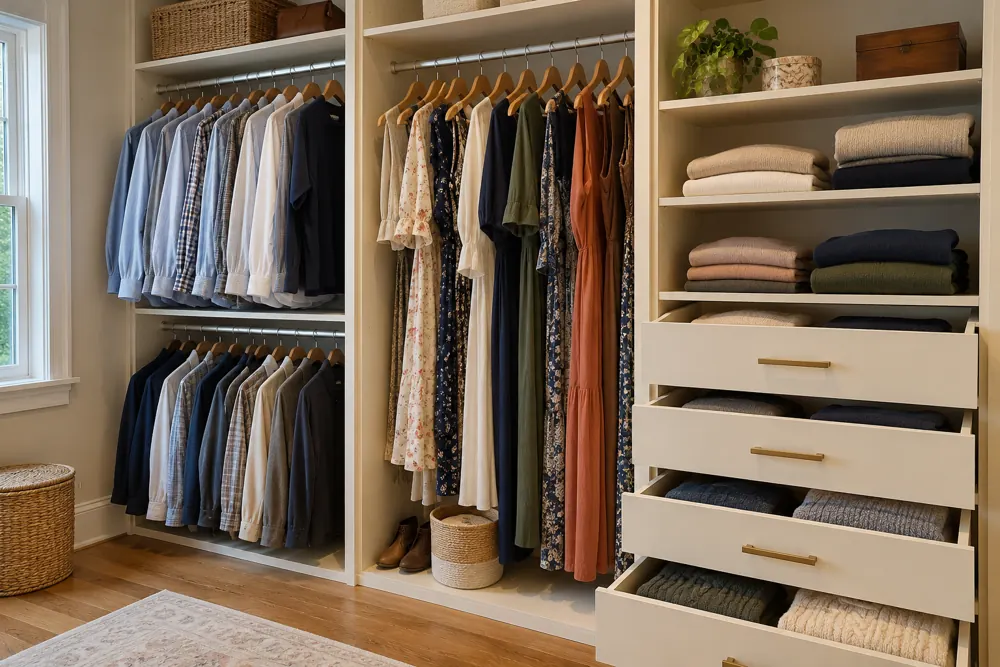
Equal wall widths do not always produce equal storage. One person may need long hanging for dresses; another may need more folded storage and shoe shelves. We compare the type and amount of clothing before deciding where to divide a shared closet.
A clear personal zone makes getting ready simpler. Shared items can have their own section, while drawers keep smaller pieces from spreading across the shelves. The layout should make it easy to see whose storage is whose without requiring identical arrangements.
- Separate long-hang requirements from everyday short garments.
- Choose drawer locations that both users can access.
- Reserve a deliberate section for seasonal or shared items.
Know what can change later.
Adjustable shelves can accommodate taller shoes, different bins or a changing mix of folded clothing. Some hanging arrangements can also offer flexibility, depending on the selected system. We explain which parts can move and which are fixed so expectations are clear.
For a child’s closet, accessible everyday storage can support independent routines. Items that need adult supervision belong elsewhere or above reach. Age-appropriate placement and suitable installation matter more than filling every available inch.
Choose details that will feel at home.
Wheaton recognizes architectural character through its Register of Historic Places. If your own room has trim or finishes you value, share those details early; they can inform the closet finish without dictating one particular style.
Simple custom closet systems start around $3,500, with larger and fully featured projects reaching $20,000 or more. Materials, size, drawers, accessories and installation requirements affect your quote. We can discuss the daily improvement you want first, then the features that fit the scope.