Group the ingredients by task.
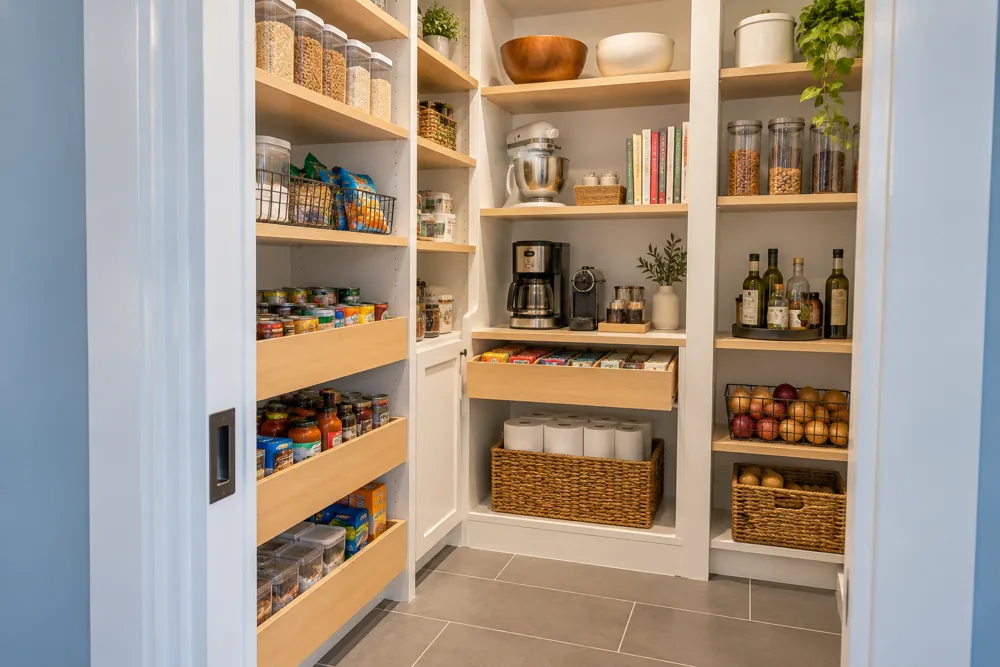
Think through a few familiar meals and the items you gather for them. A baking section can hold flour, mixing accessories and pans close together. Everyday dinner supplies may need more visible shallow storage, while bulk refills can occupy a separate lower or upper section as appropriate.
The goal is to avoid moving several unrelated things to find one ingredient. Shelf spacing should suit the containers you own, with enough flexibility to accommodate different packages after the next grocery trip.
- A cooking zone for ingredients used most evenings.
- A measured section for baking supplies and pans.
- A separate place for bulk refills and occasional-use items.
Make the corner part of the plan.
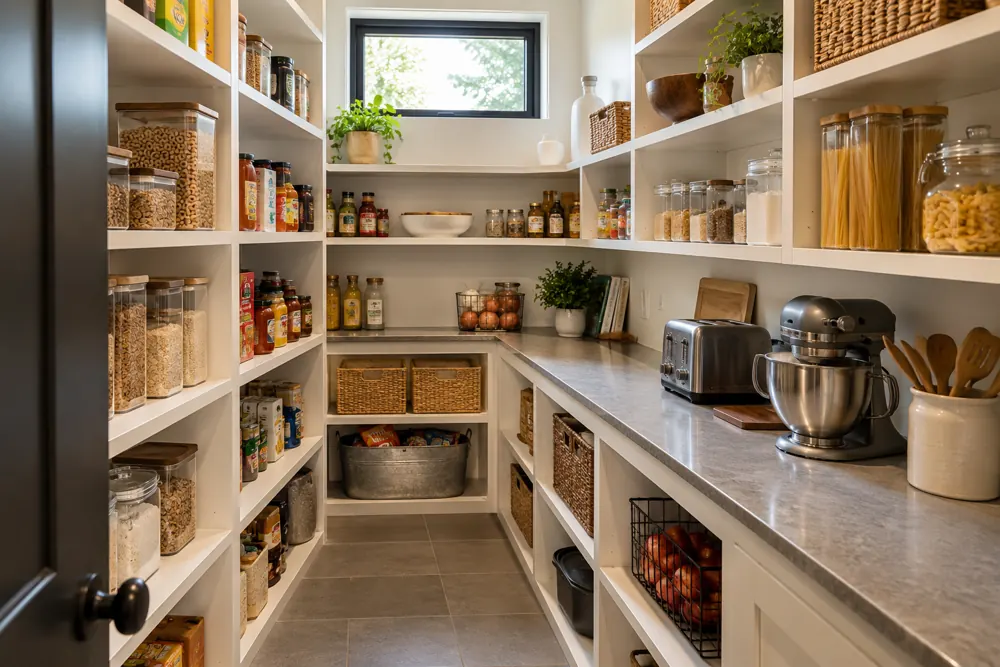
A wider pantry may offer room to turn shelving around a corner. That transition needs thought: deep overlapping shelves can hide smaller items and make the back difficult to reach. We consider shelf depths, access and the objects intended for that area together.
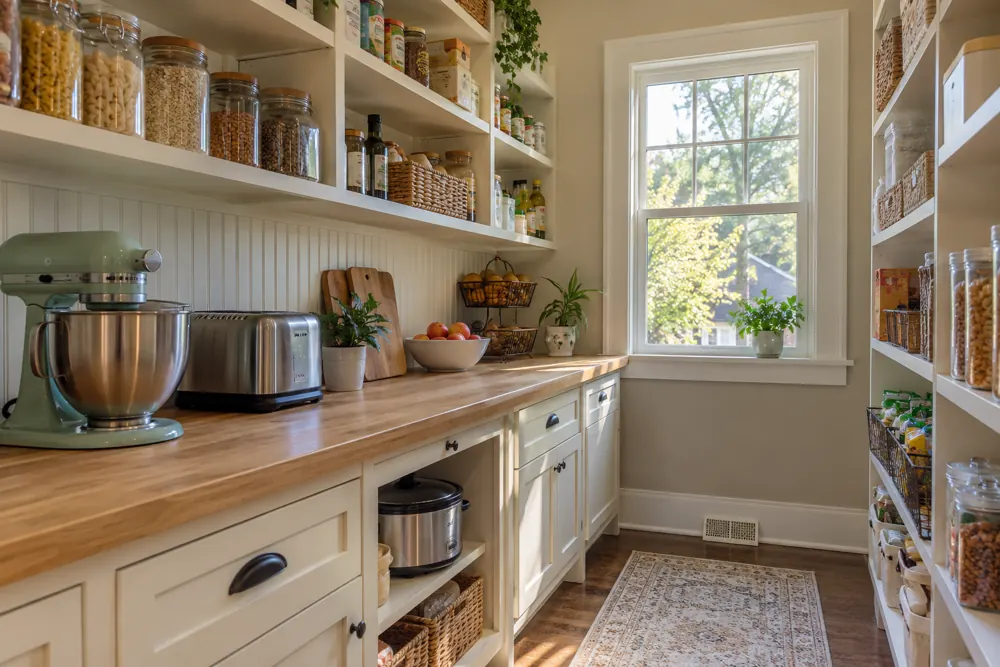
A useful landing surface can sit between storage zones if the room permits. If appliances will be used there, power, heat and ventilation must be reviewed separately. A shelf intended only for storing equipment should not be assumed suitable for operating it.
Keep the pantry comfortable in use.
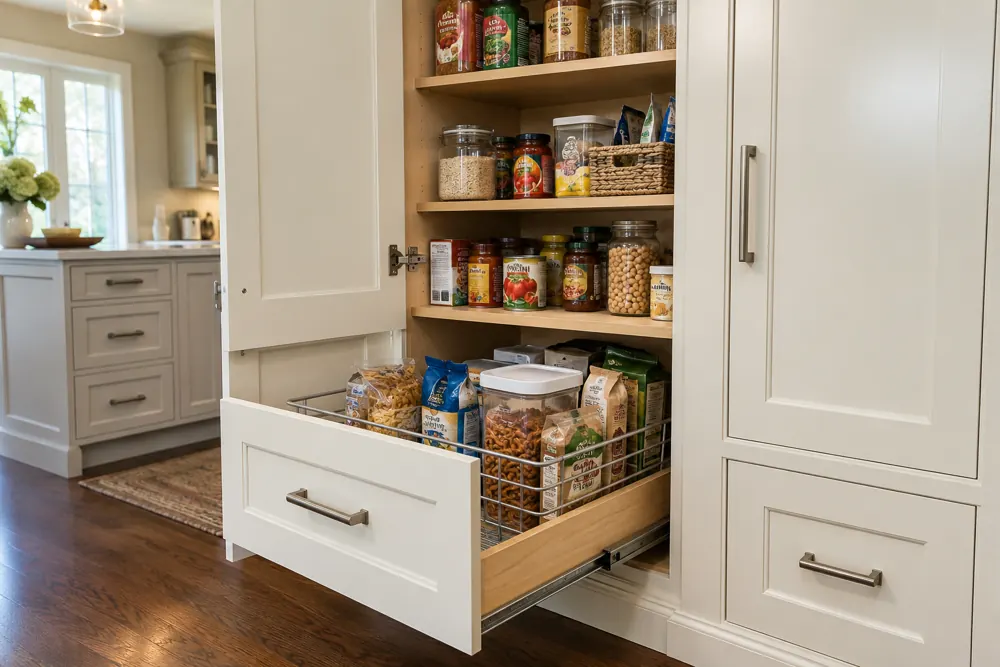
We assess the aisle with drawers and doors open, and consider whether more than one person needs to use the room. Open shelving can keep ingredients visible, while some closed storage can reduce visual clutter or hold serving pieces.
Your St. Charles home may have an existing pantry or a room you want to adapt. Share photos that show the doorway, corners and adjacent kitchen, plus the main frustration with the current arrangement. Those details help us discuss a practical design and project-specific quote.