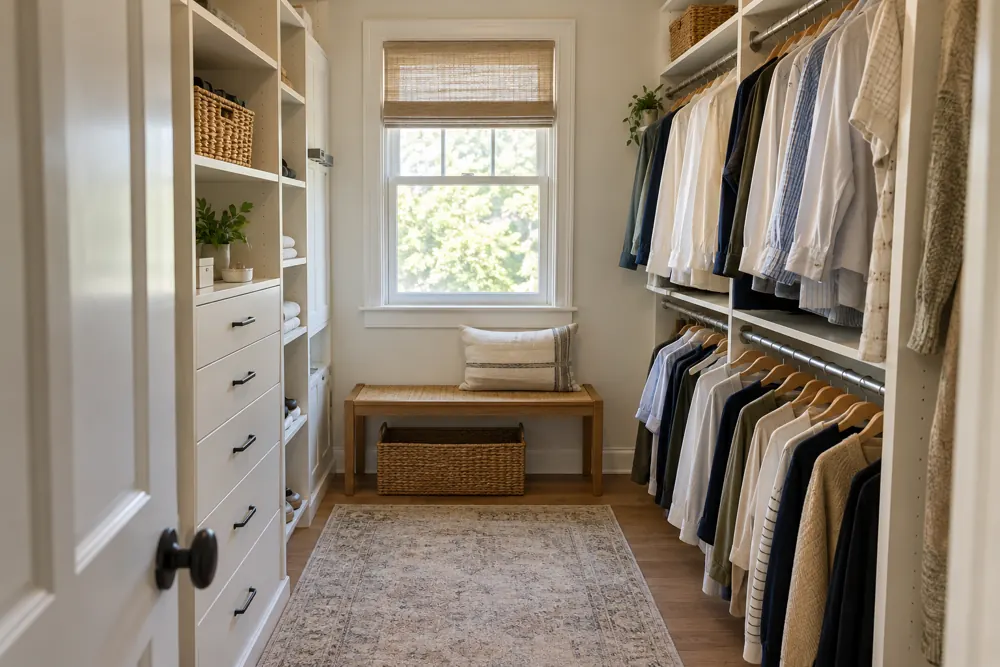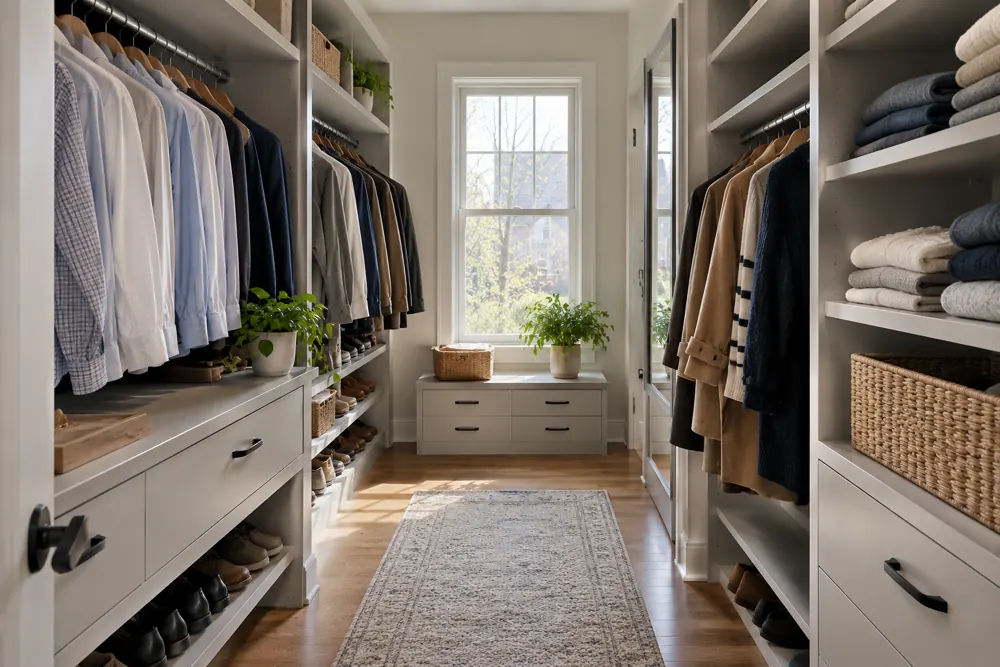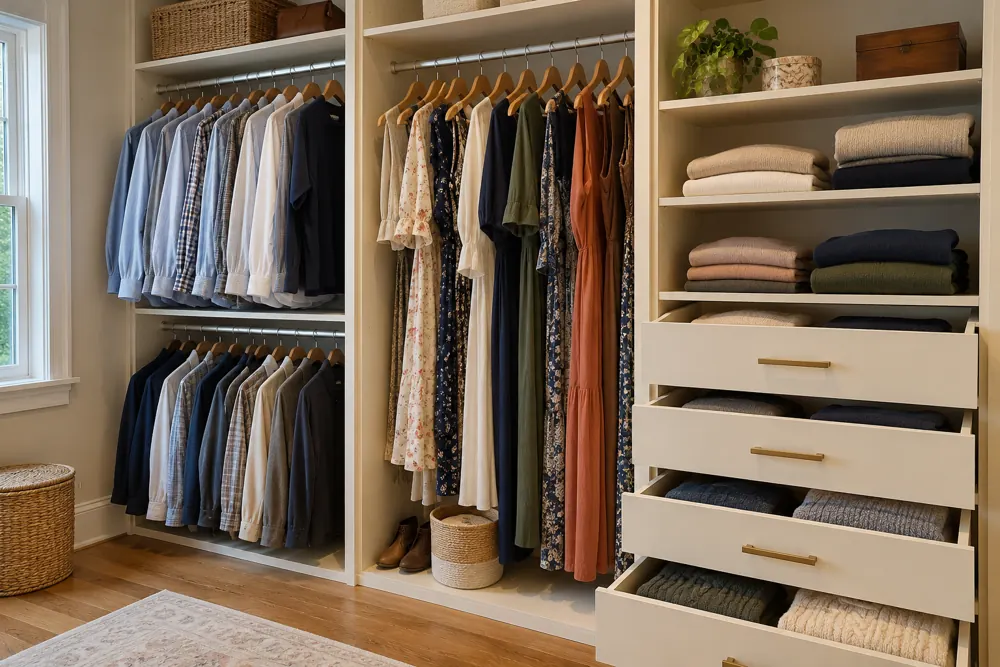
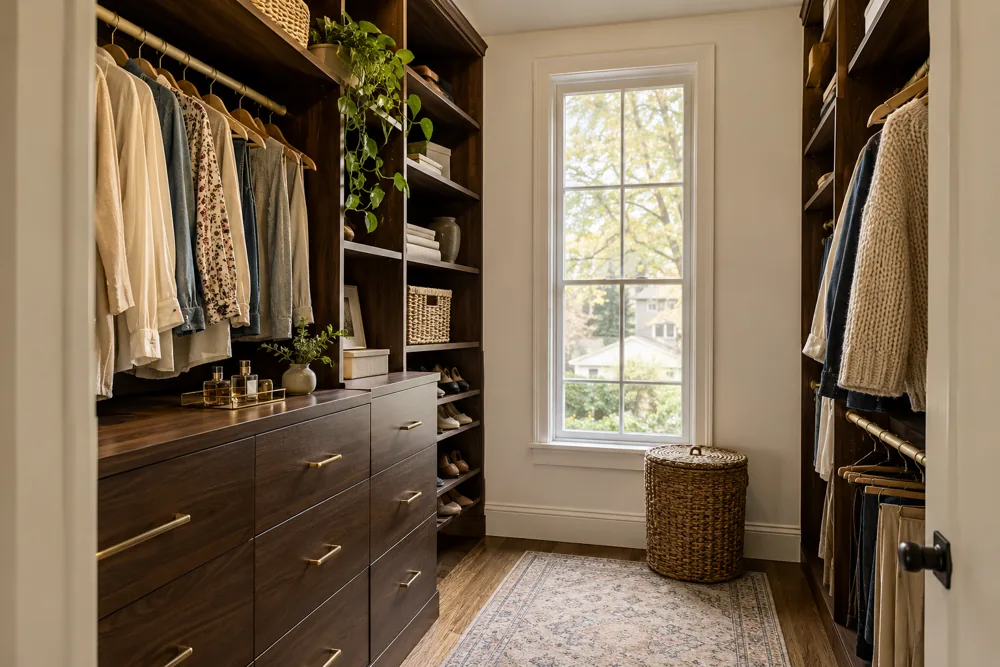
Decide what belongs behind a door.
Cabinet doors can give a closet a quieter appearance, especially when the storage is visible from the bedroom. Open hanging makes daily clothing easy to browse. Neither approach is automatically better; the right balance depends on your routines, the room and the clearances available.
Drawers can keep smaller pieces together, while shelves provide space for bags or folded knits. We locate those features around the opening and the way you move, so the finished appearance supports a useful interior rather than concealing an awkward one.
- Open storage for the wardrobe you want to see at a glance.
- Drawers sized for smaller clothing and accessories.
- Closed sections for a calmer view from the bedroom.
Choose the finish in context.
Geneva’s architectural heritage includes homes that have adapted to new uses over time. Your own room may also need a new function without losing the details you like. Share photographs of the flooring, trim and furniture before selecting a finish.
Warm wood looks, painted surfaces and hardware can each change the character of a closet. Compare samples alongside the surrounding materials and consider how the room is lit. A reference image is a helpful starting point, but the final choices should work in your actual setting.
Build the proposal around your priorities.
Simple custom closet systems start around $3,500, with larger, fully featured projects reaching $20,000 or more. Doors, drawers, materials, accessories and installation conditions all affect the price.
If the main goal is a coordinated appearance, say so. If you need more usable storage first, start there. Your consultation connects those priorities to the scope so you can review a proposal that explains the choices involved.