Separate active papers from stored records
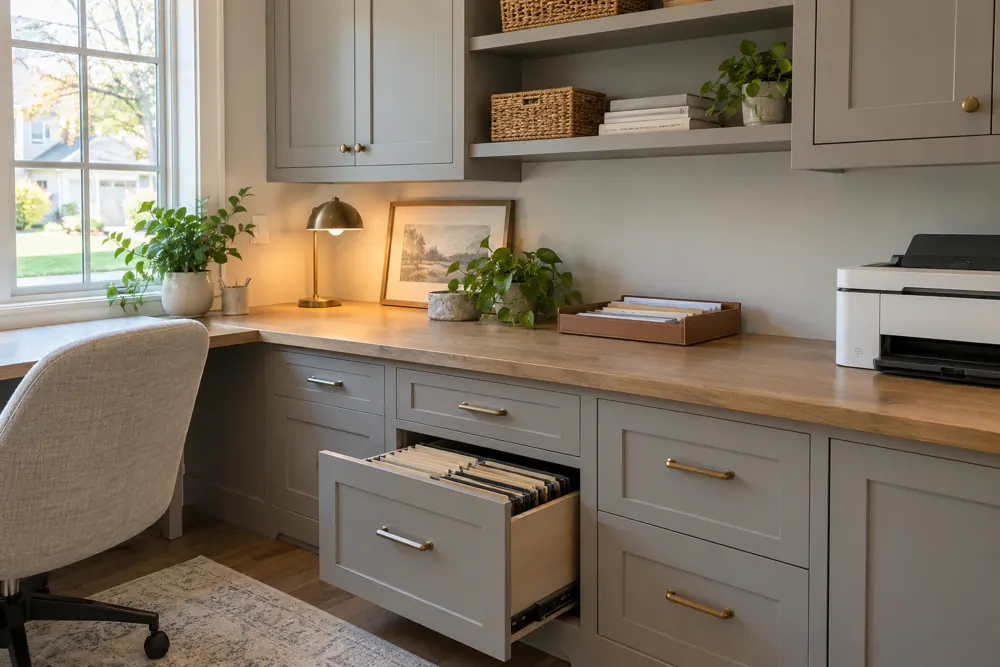
Paperwork becomes easier to manage when documents in use have a different home from records you simply need to retain. A single deep drawer can conceal both categories, but it may make the next task harder to find. Start by noticing what kinds of paper collect on the desk.
Incoming mail, a current project, reference material and archived records do not all need the same access. Your storage can reflect those stages without becoming an elaborate filing system. The goal is to make the next action obvious and keep long-term storage from occupying the work surface.
Give incoming paperwork a small landing place
A limited tray or defined section can keep new papers together until you review them. It should be convenient enough to use, but not so large that it quietly becomes permanent storage. Keep the landing area separate from the part of the desk needed for everyday work.
If several people contribute household paperwork, agree where it arrives and who reviews it. Cabinetry can provide the place, but the routine still needs to be clear. A beautifully fitted office will not automatically sort mail that has no agreed destination.
Choose storage for the way you retrieve information
Consider whether you naturally look for a folder, a binder or a labeled box. The layout should accommodate the system you will actually maintain. Bring examples of the files and materials you use so the proposed drawers and shelves can be discussed around their real shapes.
Not everything needs to be kept in paper form, but decisions about legal, financial or other record retention should follow advice appropriate to those documents. The storage plan should support the categories you choose to retain, not supply a rule about when they can be discarded. Keep any sensitive material in storage suited to your household’s privacy needs.
Include frequently used reference books or manuals in the same conversation so they do not gradually displace the area reserved for active papers.
Build a short reset into the workspace
A useful office gives current papers a route off the desktop when the workday ends. You should be able to restart without searching through unrelated stacks.
- Create one small place for incoming papers.
- Keep active work separate from retained records.
- Bring real folders or binders to the design conversation.
- Decide who maintains shared household paperwork and where it belongs.
Make it work in your home.
FG Home and Closets designs and installs storage from Aurora, Illinois. Share your room, priorities and ZIP code to start a free design consultation.
Explore home offices Explore craft & hobby rooms