Decide what deserves to be visible
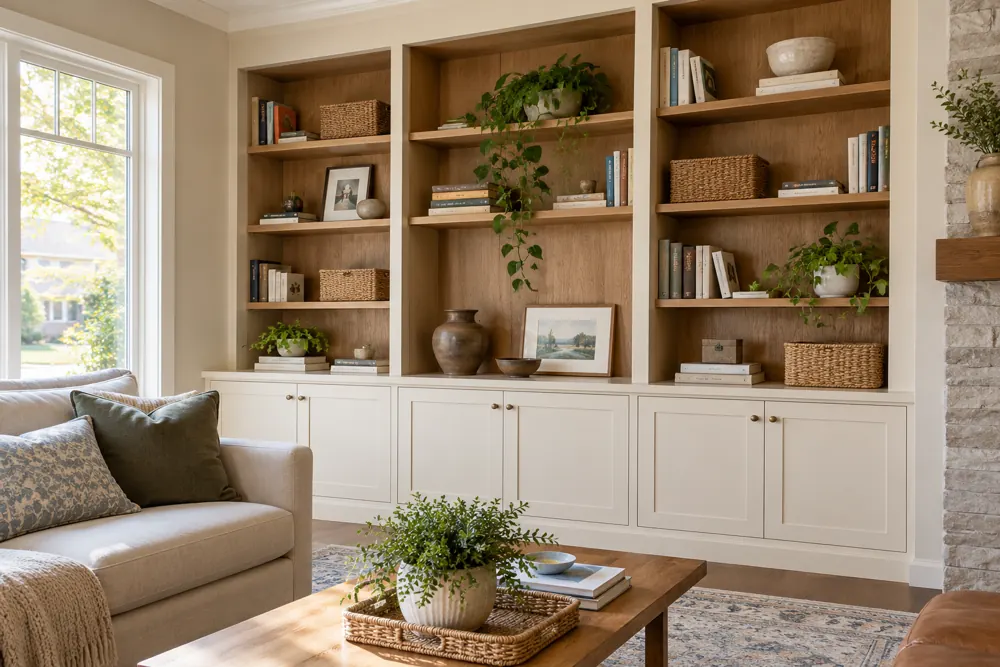
Open shelves and closed cabinets solve different problems. Shelves can keep useful items easy to see and give books or favorite objects a place in the room. Doors can contain categories that are harder to keep visually calm, such as paperwork, mixed supplies or media equipment.
Start with the contents rather than deciding that an entire wall should be open or closed. Some belongings benefit from visibility; others are easier to live with behind a door. A balanced design can make the room feel organized without requiring every shelf to remain arranged for a photograph.
Use open storage with a clear purpose
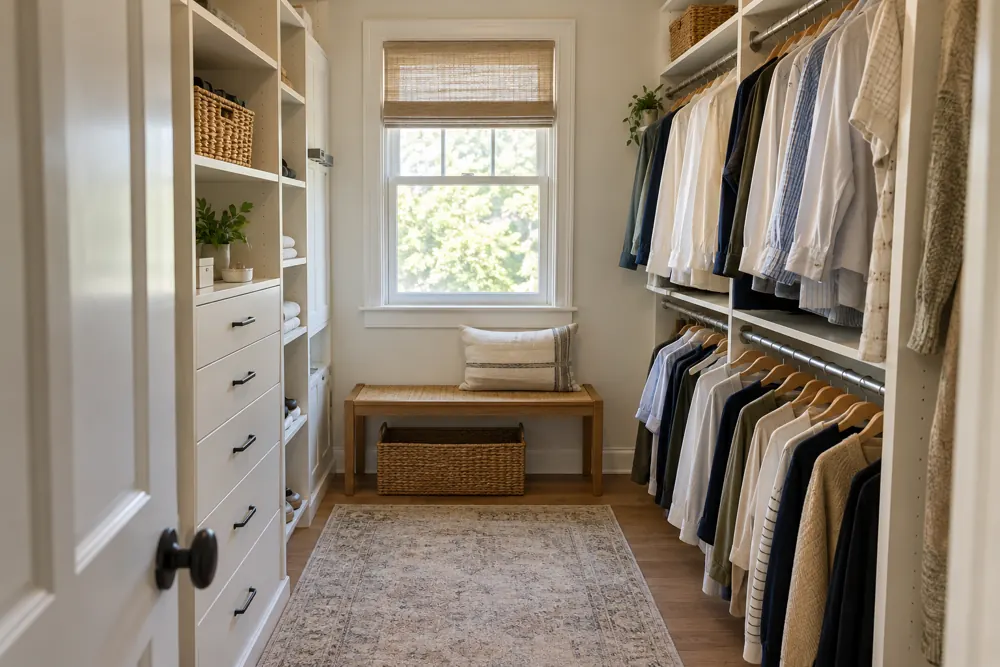
Open shelves work best when their spacing and depth relate to what they will hold. Books, baskets, folded clothing and display objects have different shapes. A large empty gap above a small category may be less useful than a more considered arrangement.
Think about maintenance and the way the room is used. An open shelf may be convenient for a frequently reached book but less appealing for a collection of loose papers. Do not rely on decorative baskets to solve every category before checking whether they are easy to retrieve and replace in the proposed space.
Let closed storage do the quiet work
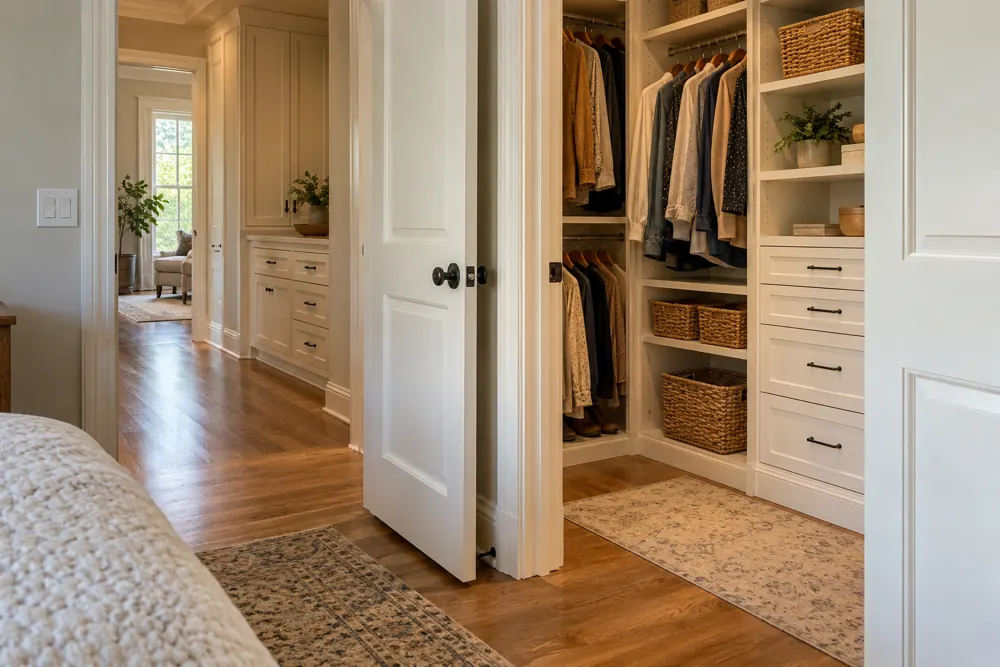
Cabinet doors and drawers can give mixed belongings a defined home while keeping the room’s overall appearance simpler. The interior layout still matters. A deep cabinet with no plan for its contents can hide clutter without making anything easier to find.
Consider how doors and drawers will operate around furniture, walking routes and other cabinetry. In an office or media area, equipment access and the selected product’s requirements also need to be discussed. The design should support use and maintenance rather than concealing something so thoroughly that it becomes awkward to reach.
Consider which categories change frequently, because those areas may benefit most from a layout that is easy to adjust.
Compare the storage by category
A practical exercise is to divide your belongings into three groups: keep visible, contain and decide later. This makes the open-versus-closed conversation more concrete.
- Use open shelves for categories that benefit from quick visibility.
- Give loose or visually busy supplies an organized interior home.
- Check the fit of real books, baskets and equipment.
- Leave some space for the room to change without restyling every shelf.
Make it work in your home.
FG Home and Closets designs and installs storage from Aurora, Illinois. Share your room, priorities and ZIP code to start a free design consultation.
Explore entertainment & built-ins Explore home offices Explore pantries